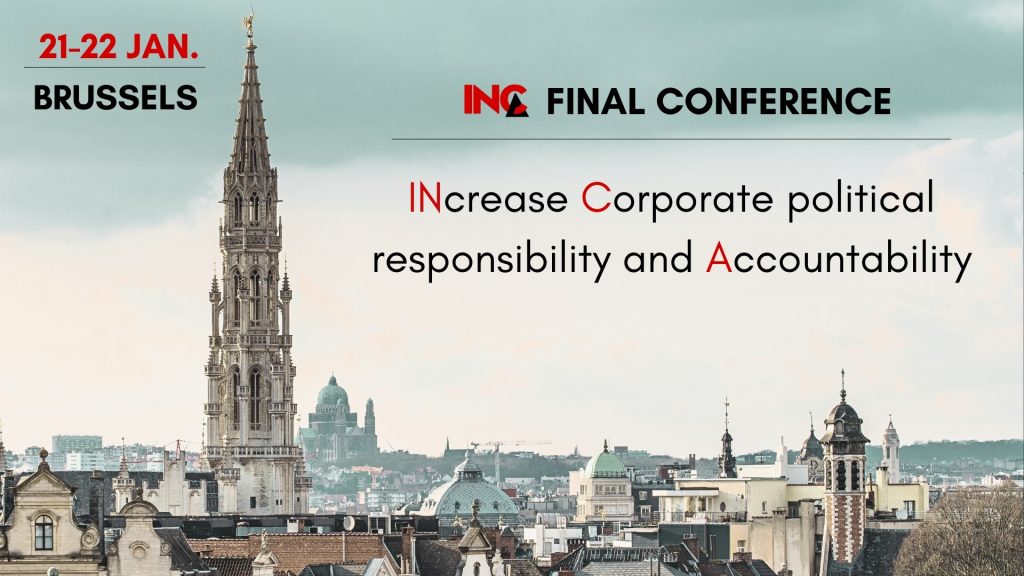
Europe and Bigh Tech: the INCA Final Conference in Brussels
In January 2026, Brussels will host the convergence of scholars, policymakers, and practitioners who have spent three years investigating one of contemporary capitalism’s most pressing challenges: the concentrated political power of GAFAM corporations. This final event represents not an ending, but a consolidation of critical insights urgently needed to inform European policy-making on digital governance.
Since its inception, INCA has operated from a foundational premise that often goes unspoken in mainstream debates: digital platforms are not merely technological innovations but political actors wielding extraordinary influence across labour markets, legislative processes, and public opinion formation. While digital capitalism has been celebrated for efficiency and convenience, INCA has systematically documented the costs: the erosion of labour protections, the captured regulatory processes, the manufactured consent through strategic narrative production.
The Brussels event, spanning 21-22 January at Rue du Montoyer, will showcase three years of rigorous empirical research across multiple European contexts. The opening session focuses on a question deceptively simple yet profoundly revealing: What do European citizens actually say when they talk about digital platforms? The presentation of the European Citizens Survey, alongside discourse analysis of media representations from 2007-2020, promises to expose the gap between citizens’ concerns and the carefully curated narratives platforms project about themselves.
The program’s architecture traces how platform power operates through multiple registers simultaneously. The analysis of GAFAM political influence examines lobbying expenditures, regulatory capture, and the subtle mechanisms through which corporate strategies shape European digital law. A roundtable discussion will involve European Commission representatives and scholars, while the session on “GAFAM and Labour” will present findings on platform work exploitation using frameworks grounded in industrial relations analysis. The concluding session on “How to Improve Platform Organisations?” explicitly addresses alternatives: different models of governance, action research methodologies, codes of conduct, and regulatory mechanisms that might constrain corporate power while preserving technological innovation.
The launch of the Big Tech Watch Think Tank during the event signals the commitment to sustained critical engagement beyond the project. In an era where technology shapes every facet of our lives, understanding the political influence of big tech companies on democracy, economy, and labour is crucial. The establishment of an international think tank is aimed at researching these dynamics and promoting a democratic, conscious, and sustainable technological transition.
See you in Brussels!
Edoardo Mollona, University of Bologna, and Marco Palma, SUPSI
Share on Facebook Share on Twitter Share on Pinterest